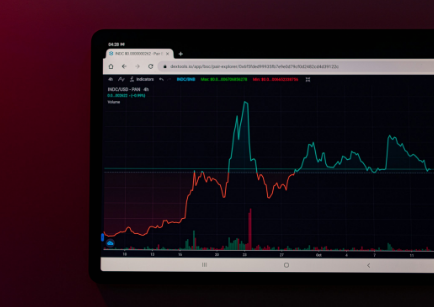
What are the most effective strategies for consistent Forex trading?
Consistent trading in the Forex market requires a disciplined approach rooted in proven strategies. Among the most effective techniques are trend-following, breakout trading, and range trading. Trend-following involves identifying and trading in the direction of prevailing forex market trends, which statistically increases the probability of success. Breakout trading focuses on key support and resistance levels, capitalizing on sudden price movements. Range trading, on the other hand, is suitable in stable markets, where traders buy at support and sell at resistance, ensuring controlled risk exposure.
How important is risk management in Forex trading?
Risk management is a cornerstone of consistent trading. Limiting exposure to any single trade to a small percentage of the total account—typically between 1% and 3%—helps prevent significant losses. Stop-loss and take-profit orders are essential tools that allow traders to control risk automatically, preventing emotional decision-making during market volatility. Statistical analysis suggests that traders who implement strict risk management are more likely to maintain consistent profitability over time.
Does technical analysis guarantee success in Forex trading?
Technical analysis provides a framework for decision-making but does not guarantee profits. Indicators such as moving averages, RSI (Relative Strength Index), and MACD (Moving Average Convergence Divergence) help identify trends and market momentum. Studies show that combining multiple indicators can enhance accuracy, but traders must remain flexible and avoid over-reliance on a single tool. Consistent trading success comes from adapting strategies to market conditions and integrating both technical and fundamental analysis.
How can traders develop a consistent trading plan?
Developing a consistent trading plan begins with clearly defined goals and rules. Traders should establish entry and exit criteria, determine acceptable risk levels, and maintain a trading journal to track performance. Statistical tracking of past trades helps identify patterns, strengths, and weaknesses, enabling continuous improvement. Research indicates that disciplined traders with a structured plan experience higher success rates and reduced emotional stress compared to reactive, impulsive traders.
What role does market psychology play in consistency?
Market psychology significantly affects trading consistency. Fear and greed often lead to premature exits or overleveraging, which can disrupt long-term performance. Traders who maintain emotional discipline, follow a predefined strategy, and avoid impulsive decisions tend to achieve more stable outcomes. Professional traders often adopt mindfulness techniques and scheduled review sessions to manage psychological biases and maintain focus.
Are automated trading systems useful for consistency?
Automated trading systems, also known as Expert Advisors or algorithmic trading, can enhance consistency by executing trades based on predefined rules without emotional interference. While statistics show that automation reduces human error, the system’s effectiveness depends on the quality of the strategy and continuous monitoring. Combining automated tools with manual oversight often yields the best results.
Conclusion:
Consistency in Forex trading is achievable through disciplined strategies, robust risk management, and psychological control. By adhering to proven trading techniques, tracking performance with statistical analysis, and maintaining a structured approach, traders can navigate the complexities of the Forex market while minimizing risk and maximizing long-term success.